
Salt Lake City Directory Landscape
Salt Lake City people directories do not live in one database. Useful sources are split by the role or fact that created an entry. City pages list services and some named officials. Education directories identify faculty and staff. County assessment records work as an owner directory, while state licensing systems connect a name to a regulated trade. For an earlier resident, scanned directories, newspapers, yearbooks, cemetery records, and tax rolls supply the deeper trail.
| Salt Lake Directory | People or Roles Listed | Source Office | How to Browse |
|---|---|---|---|
| City A-Z and department contacts | Services, offices, and selected staff | Salt Lake City | Free browse |
| University advanced directory | Faculty, staff, and departments | University of Utah | Free field search |
| School district staff pages | District staff grouped by team | Salt Lake City School District | Free browse and page search |
| Find a Parcel | Current assessed property owners | Salt Lake County Assessor | Free owner, address, or parcel search |
| Regulatory license directories | Licensed professionals and businesses | Utah regulators | Free public lookup |
| Utah City Directories | Past residents, firms, streets, and groups | Utah Historical Society | Scanned and OCR-searchable volumes |
Choose a source by time and relationship. A current work affiliation points to a staff or professional directory. A street address may lead to the Assessor, a geographic Polk volume, or a city plat. A family-history question benefits from records that capture households and neighbors. The city A-Z page is best for reaching an office, not for finding every municipal employee by name.
Salt Lake City Government Directory
The Salt Lake City A-Z directory is organized around departments and public services. It supplies main lines for functions such as building permits, business licensing, civil enforcement, the cemetery, Justice Court, and the City Recorder. It does not claim to be a citywide employee-name index. When the person is known by role rather than name, the service directory is often the quickest route to the right desk.
Named staff appear in narrower rosters. City Human Resources lists executives, recruiters, and business partners with titles or assignments, work phones, and email. The Finance contact list groups staff by function. These Salt Lake City directory entries describe public duties and office contacts, not home information.
| Person | Full name on a named roster |
|---|---|
| Public role | Title, assignment, team, or service function |
| Work contact | Direct or office phone and official email when published |
| Office | Department grouping or municipal location |
The fallback is simple: call the department main line, describe the public function, and ask for the responsible office. If the needed roster is itself a public record but is not posted, the City Recorder runs the written GRAMA request channel. The Salt Lake City public records page covers that access process without turning the directory search into a records-law task.
The official city directory page shows the service-first design used by Salt Lake City.
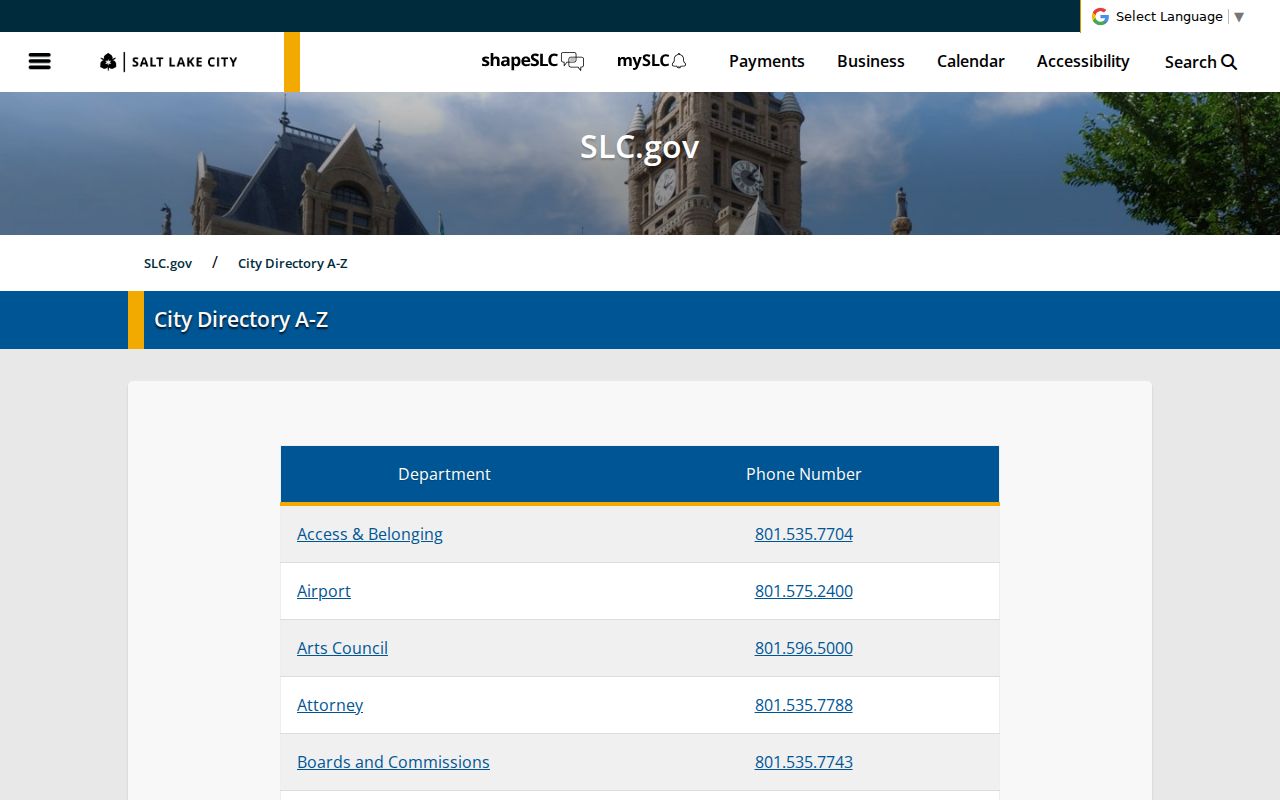
That layout makes office names and phone routes more reliable than a guessed staff-name query.
University of Utah People Directory
The University of Utah advanced directory is the strongest field-based people directory in Salt Lake City. It supports a direct person search and a department or organization search. A result can show the surname-first display name, academic or staff title, and a work telephone number when one is published. Duplicate entries can occur, and some results say that a phone number is not available, so the department field helps distinguish people with the same name.
| Directory Field | Input | Best Use |
|---|---|---|
| First, middle, last name | Text | Find or narrow a person |
| Email, uNID, phone, address | Text | Match a known campus detail |
| Title | Text | Separate similar names by role |
| Department or organization | Text | Browse an academic or service unit |
| Department ID, location, keyword | Text | Refine a broad campus search |
The advanced campus search exposes more ways to confirm an identity than a plain surname box.
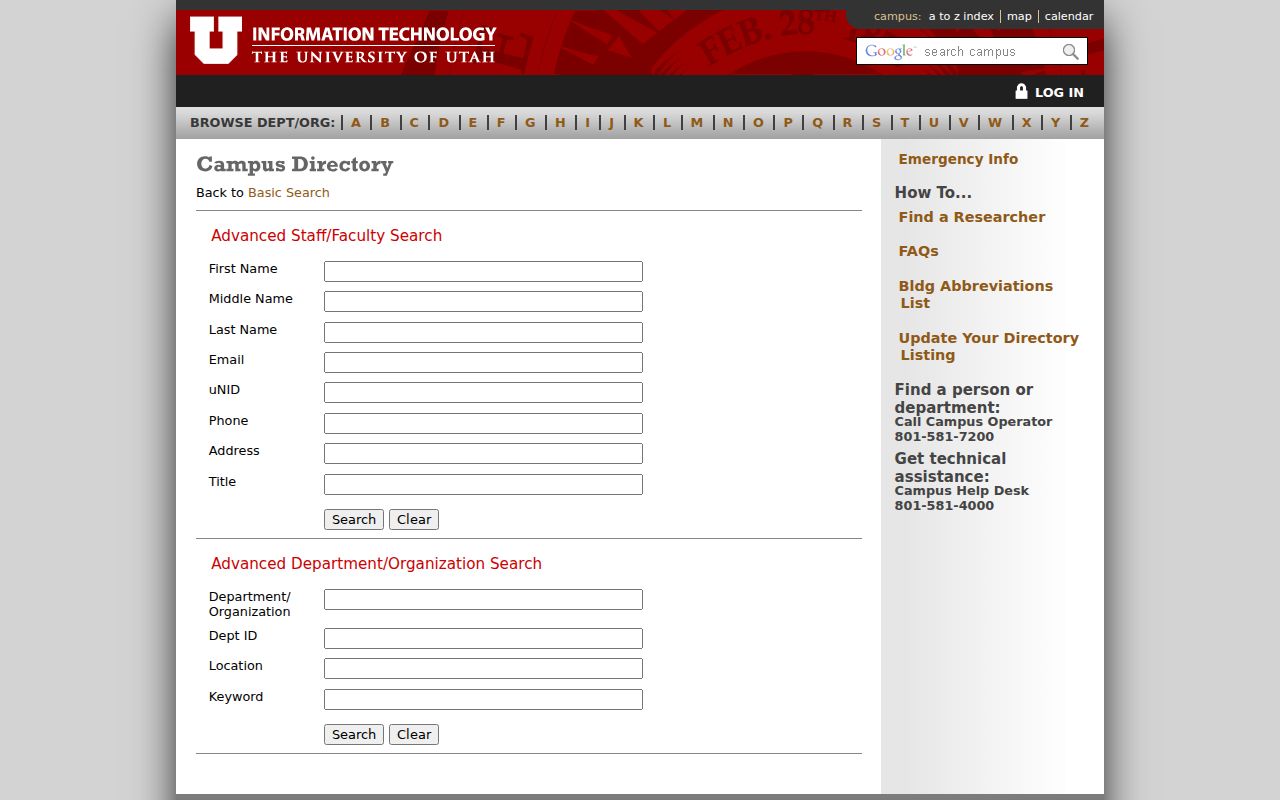
Department, title, and campus contact details can separate two faculty or staff members who share a name.
Note: Campus directory details are professional contacts, and a missing phone number does not mean the person is absent from the university.
Salt Lake City School Directory
The Salt Lake City School District staff pages group people by units such as Administration, Client Server, Database and Development, Help Desk, Network, School Support, and Student Information Systems. Repeated staff-directory search inputs appear on the pages, but the underlying districtwide search fields were not exposed during research. Treat the published team rosters as the verified access path.
A department name can be more useful than a partial personal name. Browse the right team, then compare the listed title and official contact details. For a classroom or school contact not found on the central technology roster, move to the relevant school or department page and use its main office channel.
The district technology staff directory illustrates this team-based approach.
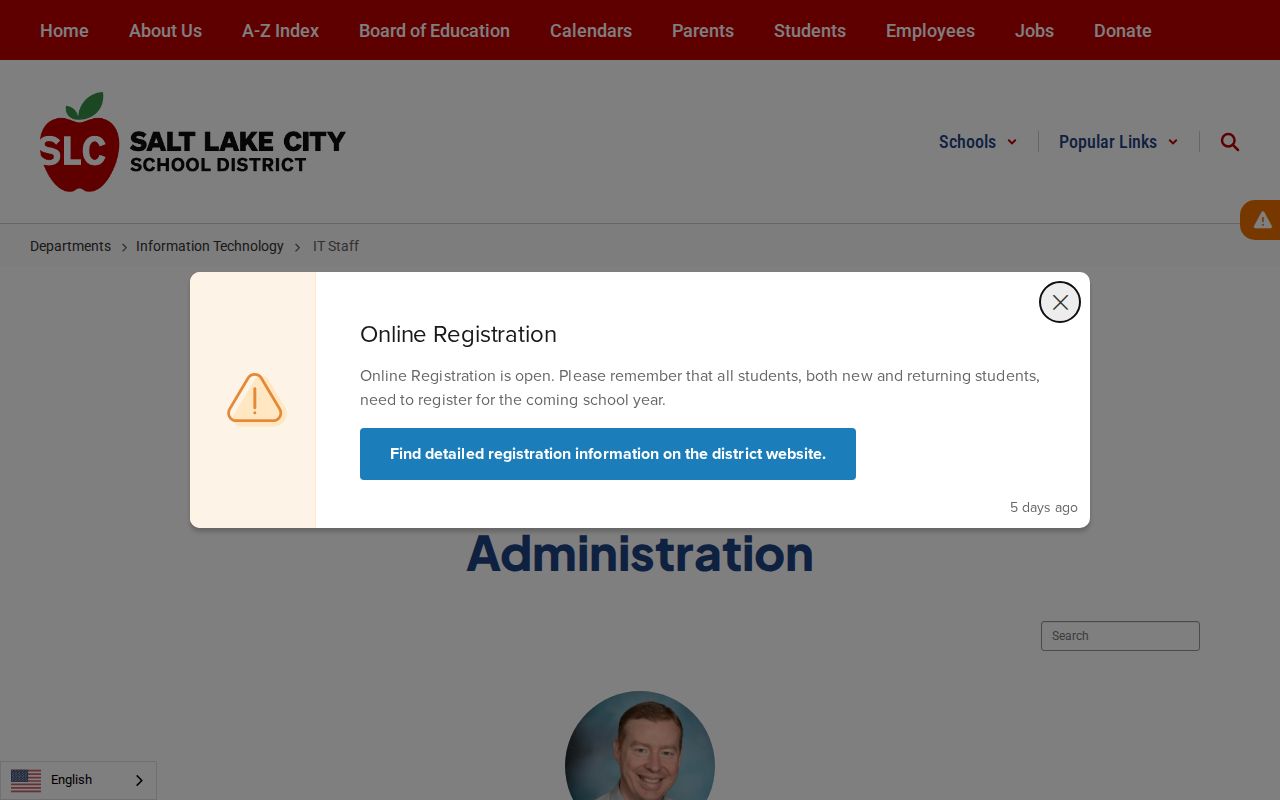
Its grouped roles help confirm which staff member handles a given district system or support area.
Salt Lake City Owner Directories
The Salt Lake County Assessor roll acts as a directory of assessed property owners. Find a Parcel accepts an owner in Last Name, First Name order, an autocomplete street address, or a parcel number in the county format. The parcel ID is the stable bridge to the GIS viewer and recorded title instruments. An owner entry should not be treated as proof that the person occupies the site because a tax owner and a resident can differ.
The GIS viewer adds map context. It searches an address or a 14-digit parcel ID, while its Query tool can filter owner, property type, and tax district. Parcel geometry, map layers, oblique imagery, printable PDF output, and shape-based export turn the roll into a neighborhood-scale directory. The County Recorder's paid grantor/grantee index then supplies deeds and other instruments that affect title. Its oldest online year and public pre-login field list were not published, so older ownership research may need the County Archives.
The Salt Lake City Engineering Atlas Plat Index adds a city address-to-plat route.
A plat can preserve the legal geography behind an address even after street wording changes.
Salt Lake City License Directories
Utah regulatory searches provide several name-to-profession directories. The Division of Corporations offers a Business Entity Search plus a Registered Principal Search that runs the relationship in reverse, from a named person to associated entities. Its search hub also covers DBAs, trademarks, and UCC debtor filings. The Division of Professional Licensing has profession-specific tools, while public searches for real-estate, insurance, legal, and educator credentials have their own fields and scope.
Check the population before relying on a blank result. The DOPL Construction Business Registry includes only active licensees who opted in. The real-estate tool can search a person or company name, profession, or license number and requires a CAPTCHA. The insurance directory searches by location, name, or license number; a result can show business address, business phone, license number, and status. The Utah Bar directory distinguishes current authority from inactive standing.
For a business trail, search the entity name first, open its details, and then use the registered-principal route for the individual's other entity links. This is one of the few official Salt Lake City directory workflows designed to move from person to organization.
Salt Lake City Directory History
The earliest directory located in the research is G. Owens' 1867 volume. It lists Salt Lake City residents and streets and also carries business directories for Provo, Springville, and Ogden. Later R.L. Polk volumes expand the social picture. The 1894-95 directory lists residents, streets, businesses, and institutions. The 1915 volume includes officials, churches, clubs, schools, hospitals, labor groups, and nearby communities. A 1974 Polk volume supports both alphabetical and geographical searches, while a 1977 volume includes South Salt Lake.
- Alphabetical directory
- Entries arranged by surname or organization name.
- Geographical directory
- Entries arranged by street and address, useful for finding occupants and neighbors.
- OCR search
- Computer-read text from a scanned page; faded print and old type can cause missed names.
- City limits
- The legal municipal boundary, which may be smaller than the area covered by a postal name or directory volume.
The digitized volumes can be searched or downloaded, but the complete year run has not been published as one official list. No official current residential white pages, statewide employee phone book, or public alumni directory was confirmed either. Search exact surname variants, inspect the page image, and check adjacent years. Printed people directories often show an occupation, spouse, firm, or address that helps distinguish same-name residents.
Directory Geography Beyond Salt Lake City
A Salt Lake City heading does not always mark a strict city boundary. The 1915 Polk directory reaches Murray, Sandy, Midvale, Garfield, and suburbs, and later volumes may include South Salt Lake. By contrast, a Salt Lake City business license applies only inside the municipal limits. A postal address using the city name can also fall outside the corporation boundary. Confirm a street against the city district map or parcel jurisdiction before choosing the next directory.
Reverse searching is ideal for this problem. Find a known resident alphabetically, note the exact street form, then switch to the geographical pages to see the household and nearby entries. Search numbered streets as words, ordinals, and modern hundred-block forms. Moving through adjacent volumes can show when a household arrived, left, or changed its name display.
Note: Directory coverage describes a publisher's market, not a legal boundary, so verify jurisdiction before requesting city-held records.
Salt Lake City Archive Directories
The City Library Archives and university collections fill gaps that a standard directory leaves. City Library Periodicals Archives holds local newspaper microfilm, clippings, and zines; Special Collections has local-history books, maps, photographs, Masonic Library Records, scrapbooks, and pamphlets. Most material is for in-library use, with scanners and microfilm readers available. HeritageQuest adds census and family-history sources.
| Collection | Local Coverage | Directory Value |
|---|---|---|
| City Library newspaper archive | Deseret News Weekly microfilm from June 15, 1850 | Names, notices, obituaries, and local events |
| Utah City Directories | 1867 Owens and later Polk examples | Residents, addresses, firms, and civic groups |
| Utonian yearbooks | University communities | Classmates, clubs, and campus ties |
| Tribune negatives | More than 171,000 images from the 1930s-1960s | Visual links to people, firms, and places |
| Salt Lake City Cemetery | Name-to-grave index | Burial location and family-history lead |
The digitized Utah City Directories collection provides scanned and text-searchable local volumes. Its image capture was unsuccessful, so the collection remains a direct research link rather than an unsupported illustration. Pair a directory entry with a newspaper notice or yearbook page to reconnect classmates or rebuild a residence trail with stronger identity checks.
Salt Lake City Burial Directory
Salt Lake City Cemetery offers an official name-to-grave route. Enter a deceased person's name as Last, First Middle, select a result, and use the location tool for internal directions. Ordinary mapping services do not recognize the cemetery's internal roads, which makes the official index more than a name list. Multiple people can be added to one route, and walking mode provides finer directions.
Photographs and institutional records add another kind of directory. Marriott Digital Library's Tribune negative collection can connect names to local shops, public events, buildings, and neighborhoods. Utonian yearbooks preserve university groups. Holy Cross Hospital journals contain limited early birth and death evidence plus patient, admission, physician, and surgery material, subject to access limits. City Library's Masonic records may reveal a membership trail that never appeared in a phone book.
Together, these Salt Lake City people directories can test whether the same name belongs to the same life. Dates, work roles, street context, and group ties are more persuasive when they agree across separate sources.